
Radon & Lung Cancer Prevention
Testing and Risk Reduction for Homes in Greater Vancouver, BC
SafeHomeBC → Exposure & Risk Assessment Service
• C-NRPP certified • Health Canada aligned • Insured • Reports for real estate
Questions? Request A Free Consultation
No one deserves to be exposed to high radon levels at home

Professional radon testing and mitigation in Greater Vancouver.
SafeHomeBC testing is affordable and competitively priced, with most home tests ranging from $129 to $383, depending on the option you choose.
Radon – Fast Facts for Families
-
You can’t see, smell, or taste it. It has no warning signs.
-
It can be in any home. About 7% of Canadian homes are above Health Canada’s guideline.
-
In parts of BC, up to 1 in 3 homes can have high levels.
-
Radon causes lung cancer. It is the #2 cause after smoking and the #1 cause in non-smokers.
-
It leads to about 3,200 deaths each year in Canada.
-
The main exposure is at home, where families spend many hours over many years.
-
The risk increases with higher levels and longer exposure.
-
The good news: Radon is easy to test and can be reduced.
We calculate your real exposure - not just a number!
Two homes with the same radon can have different risks. We show you why.
Most reports tell you what. We tell you what to do
The BC Centre for Disease Control recommends testing in all homes across British Columbia.
Testing is the only way to know. If it’s elevated, most homes can reduce levels effectively.
Radon vs. Carbon Monoxide (CO)
Both are invisible, odourless gases found in homes.
Radon causes about 10× more deaths.

According to Health Canada:
• 300 deaths per year from carbon monoxide
• 3,200 lung cancer deaths per year from radon
You can’t see or smell radon.
The only way to know is to test.
-
Carbon monoxide risk is well known because it can make you sick quickly.
-
Radon is less well known because it builds up quietly inside homes over many years and causes no symptoms until serious illness (Lung Cancer) develops.
-
Radon exposure is preventable.
Health Canada’s guideline is 200 Bq/m³. Above that, action is recommended.
SafeHomeBC is led by a toxicologist with 25+ years in environmental risk assessment
Not sure where to start? We make it simple.
Talk to us 📞 (604) 712 - 5577
How It Works
1. Free call.
We answer your questions and explain your options.
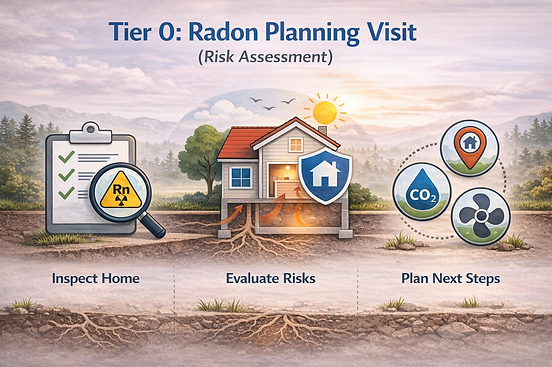
2. Quick home visit.
We place the monitor properly. No drilling needed for testing.
3. Clear results.
We explain what your number means — in plain language.
4. If levels are high.
We explain simple next steps. No pressure.
Testing Options
Tier 1 – Quick Screen (3–7 days)
Fast check when you need an early answer.
Tier 2 – Long-Term Test (3+ months)
Most accurate average. Health Canada recommended.
Tier 3 – Continuous Monitor
Ongoing tracking.
Tier 4 – After Mitigation Test
Confirms the fix worked.
Tier 5 – Mitigation (Coordinated)
We connect you with certified installers and follow up.
Typical cost (explained before you decide)
Testing fees vary by option and typically range from $129 to $383. We explain costs upfront — no surprises.
For detailed pricing and what’s included in each package, contact us.
Most families start with Tier 1 or Tier 2 (depending on timeline). We’ll recommend the simplest option that fits your home.


Questions? Talk to us
📞 (604) 712 - 5577

-
Radon has no smell and usually has no warning signs. The only way to know your home’s level is to test. If levels are high, they can be reduced.
Radon is a leading cause of lung cancer among non-smokers in Canada.
-
Radon concentrations are often highest on lower levels of the home.
-
Exposure depends on where you spend the most time—especially bedrooms and sleeping areas.
No need for alarm — just measure it.
Here’s why professional testing matters—and why families choose us.
Why families choose SafeHomeBC for radon testing
Clear, calm, science-led radon testing—built for BC homes.
SafeHomeBC is led by environmental and health professionals, including C-NRPP–certified radon professionals, with over 25 years of experience in exposure and risk assessment. We help families understand real radon risk and take the right next step—without fear-based messaging or unnecessary services.
Why professional radon testing matters
-
Correct placement matters
Radon levels can vary widely within the same home. Incorrect placement can lead to false reassurance or overestimation. In some homes, multiple devices are needed to run concurrent tests and reflect real exposure
-
The right test, the first time
Short-term and long-term tests serve different purposes. Choosing the wrong test can delay answers, extend exposure time, and increase costs.
-
Timing and conditions matter
Radon levels change with season, weather, and ventilation habits. Results that ignore these factors can be misleading.
Why families choose SafeHomeBC
-
Built for BC homes
Testing is tailored to BC housing types and ventilation realities—not generic checklists.
-
Start simple. Escalate only if needed.
Tiered, fit-for-purpose options matched to your home, timeline, and budget—so you don’t pay for everything upfront.
-
Plain-language results and next steps
Clear interpretation of what the results mean and what to do next—without fear-based messaging.
-
Fair, transparent pricing
No upselling. No hidden add-ons. Recommendations aligned with Health Canada guidance.
Not sure which option fits your home?
Call us—we’ll recommend the simplest approach that makes sense for your situation.
📞 (604) 712 - 5577
Clear results. Practical guidance.
A safer home for your family.

Testimony
Sara (Home Daycare Owner, Coquitlam)
One parent asked if we test for radon, and that made me look into it. SafeHomeBC walked me through everything, helped place the monitors properly, and kept the process calm and affordable. We chose a longer test so parents could feel confident—and now I have an official report on file. It gives parents real peace of mind.
We don’t just measure radon — we quantify your actual exposure and risk!
Read Sara’s full experience → It gives parents peace of mind knowing we’ve tested and have the report on file. I run a home daycare, and I’m really glad I went through this process—I actually felt I should share our experience. One parent who moved here from the U.S. asked if we test for radon. In their previous city, it was expected for daycares. I hadn’t thought about it before, since it’s not required here, but for me this was about safety and peace of mind for the kids and their families. I called SafeHomeBC just for guidance and was surprised how affordable it was. They started with a short planning visit, explained everything in plain language, and helped decide where the monitors should go, which really matters in a daycare. We chose a longer test so parents could feel confident in the results, and the planning visit cost was applied to the testing package. The process was calm, professional, and didn’t disrupt the children at all. Now I have an official radon report on file for my daycare—and I feel confident telling parents that we’ve taken this step seriously.
Call us for radon testing
(604) 712 - 5577
Who This Is For
-
Homeowners & families concerned about long-term health
-
Home buyers and sellers needing clear, defensible results
If you’re on a real-estate timeline, we’ll recommend the most defensible option for your deadline.
-
Landlords/strata
What You Get
-
C-NRPP–certified radon testing using professional-grade equipment
-
Clear, plain-language results — what your number means and why it matters
-
Practical, cost-sensible next steps tailored to your home (no upselling)
-
If action is needed: coordination with certified mitigation professionals and re-testing to confirm results
-
A written summary you can keep for your home records (and real estate, if needed).
Where We Serve
Greater Vancouver and select regions across British Columbia
Concerned about radon in your home?
Get clear answers and practical next steps — without fear or pressure.
Questions? Talk to us
📞 (604) 712 - 5577
SafeHomeBC is Reliable, Evidence-Based, and Aligned with Health Canada.
Want the evidence? Read the white paper:
Radon at HOMES/OFFICES: Protecting Community Health Through Testing, Awareness, and Mitigation
By Dr. Reza Afshari; MD, PhD, MPH, Senior Toxicologist (2025)
Test Now. Protect Yourself and Your Loved Ones.
-
Radon is an invisible gas that can build up in homes and is the second leading cause of lung cancer after smoking.
-
You can’t see or smell it—testing is the only way to know if your home is affected.
-
Testing is easy and helps you take simple steps to protect your family’s health.
Exposure to Radon Increases the risk of Lung Cancer in Canada
Lifetime relative risk as a function of age when exposure ends, for exposures to radon concentrations of 50, 100, 200, and 400 Bq/m3.
Estimates vary by study design and region—our approach is simple: test your home and act based on your results.
References
-
Health Canada. Radon – What you need to know (updated 2025): ~3,200 deaths/year; risk overview. Canada.ca
-
Cross-Canada Survey of Radon Concentrations in Homes: 6.9% above guideline. Canada.ca
-
Health Canada. Radon Action Guideline = 200 Bq/m³. Canada.ca
-
Health Canada. Guide for Radon Measurements in Homes (2025). Canada.ca
-
C-NRPP. Approved radon devices & testing basics. C-NRPP+1
-
Health Canada. Reducing radon levels in your home: >80% reduction; install <1 day (typical). Canada.ca
-
Health Canada. Radon Reduction Guide for Canadians: sub-slab depressurization is most effective. Canada.ca
-
BC CDC. Radon in British Columbia: Interior/Northern regions often higher; test every home/building. BC Centre for Disease Control
-
BC Lung Foundation. Radon in BC – awareness & action (incl. code updates, testing all homes). bclung.ca
-
Cross-Canada Radon Survey (2024): estimated ~17.8% of Canadians now in buildings ≥200 Bq/m³ (emerging evidence; complements older 7% estimate). crosscanadaradon.
SafeHomeBC is Vancouver’s most advanced radon testing service, combining certified measurement with personalized exposure and health risk assessment.
Customer Reviews
Jen (Parent, Port Moody)
I wanted clear answers for my kids—not fear.
During my second pregnancy, I learned that radon can be present in some homes here. I wanted clear answers without panic. SafeHomeBC took the time to explain everything in plain language, helped choose the right test, and never pressured us. The process was affordable and reassuring.
Read Jen’s full experience → ... During my second pregnancy, I learned that radon can be present in some homes in Coquitlam. I wasn’t looking to panic—I just wanted clear, reliable information about our home and my children’s health. I contacted SafeHomeBC and immediately felt listened to. They explained radon in plain language, talked through testing options, and helped us decide what made sense for our situation. I never felt rushed or pressured into anything. The testing cost less than I expected, the visit was straightforward, and the results were explained clearly. Most importantly, I walked away understanding what the numbers meant and what—if anything—we needed to do next. It gave me real peace of mind, especially during pregnancy.
Akram (Home Buyer, Vancouver)
We got clear answers fast—and a certified report we could rely on.
We were buying a home and needed answers fast. SafeHomeBC explained the options clearly and suggested a short-term (they call it Tier 1 test) to screen quickly. It was affordable, low-disruption, and gave us a certified report we could rely on. The whole process took a few days and made a stressful situation much easier.”Pull quote (under the card):“We got clear answers fast—and a certified report we could rely on.
Read Akram's full experience → We were in the middle of buying a home and needed clear answers quickly. I called SafeHomeBC and spoke with someone who walked me through the process right away. They explained the difference between short-term and long-term testing and suggested a short-term test (Tier 1) to screen quickly, given our timeline. It was affordable, and they also explained what a longer test would show if we had more time. There was no pressure—just clear options. We wanted a certified report in case there were questions or a dispute later, and that’s exactly what we got. The testing took about four days, didn’t create any mess around the house, and was handled professionally from start to finish. It took a lot of stress out of the buying process.
Call us for radon testing
(604) 712 - 5577
More reviews available on request / Google reviews
SafeHomeBC - Other indoor risks we can help assess (when relevant)
If your situation warrants it, we can also support targeted assessment of: Moisture/mould conditions, Ventilation and combustion gases, Asbestos, lead, and select household chemicals
Always optional. Recommended only when results justify it.
Contact
SafeHomeBC – Indoor Environmental Health Services
Serving: Greater Vancouver (Burnaby, North Shore, Tri-Cities, Surrey, Langley, Richmond)
📞 +1 (604) 712 5577
📧 info@safehomebc.ca
🌐 www.safehomebc.ca


